
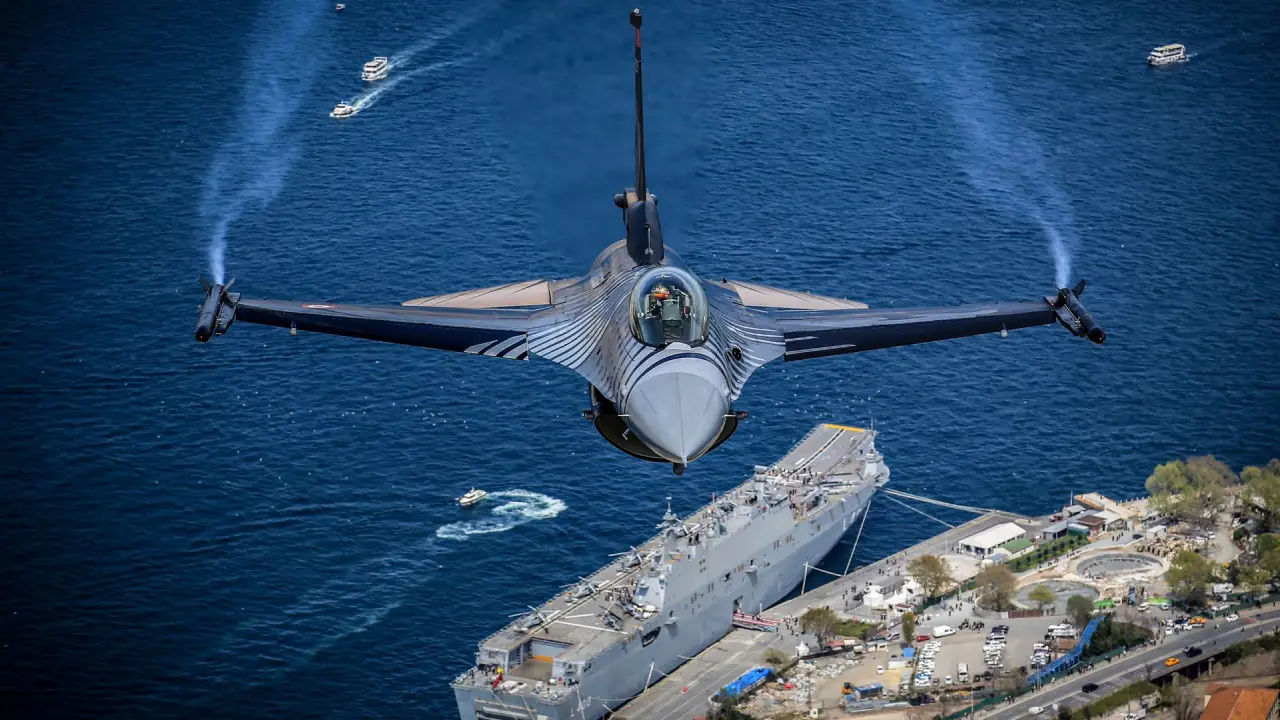
Military power remains a major factor influencing international relations, regional stability, defense partnerships, and global security in 2026. Countries strengthen their armed forces through defense spending, advanced weapons systems, air and naval capabilities, cyber operations, and strategic alliances. However, military strength is not determined by spending alone; industrial capacity, logistics, trained personnel, nuclear deterrence, and technological innovation also matter. This overview of the top 10 military powers shaping global security in 2026 highlights countries with significant defense capabilities and international strategic influence.
1. United States
The United States remains a leading global military power, supported by extensive defense spending, advanced aircraft, nuclear forces, aircraft carriers, and a worldwide network of military partnerships. Its armed forces possess substantial capabilities in intelligence, space operations, cyber defense, and long-distance deployment. NATO commitments and security partnerships across the Indo-Pacific, Europe, and the Middle East amplify its international influence. Maintaining technological superiority while managing global commitments and rising defense costs remains a central strategic challenge.
2. China
China has developed one of the world's largest military establishments and continues to modernize its navy, air force, missile forces, and space capabilities. Its growing shipbuilding capacity and investment in advanced technologies are reshaping the strategic balance in the Indo-Pacific. Beijing places particular emphasis on regional deterrence, maritime security, and its claims concerning Taiwan and the South China Sea. China's expanding capabilities make it a central actor in international security discussions and long-term strategic competition with the United States.
3. Russia
Russia remains a major military power because of its nuclear arsenal, missile capabilities, large defense-industrial base, and extensive experience in high-intensity conflict. Its armed forces have undergone significant operational changes during the war in Ukraine, while sanctions and battlefield losses have created important economic and logistical pressures. Moscow continues to influence European security calculations and strategic relations with other regions. Nuclear deterrence, force regeneration, and the sustainability of defense production remain important elements of Russia's military position.
4. India
India is a major military power in South Asia, supported by large armed forces, nuclear deterrence, growing defense manufacturing, and significant investments in air and naval modernization. Its strategic priorities include border security, maritime interests in the Indian Ocean, and maintaining regional stability. India also participates in international defense partnerships and expands domestic production to reduce reliance on foreign suppliers. Its geographic position and growing economic capacity give its defense policy substantial importance for the Indo-Pacific balance.
5. South Korea
South Korea maintains advanced conventional forces designed to deter threats from North Korea and defend its territory. Its military capabilities include modern combat aircraft, missile defense, artillery, naval platforms, and increasingly sophisticated domestically developed defense systems. The alliance with the United States adds an important layer of deterrence and operational cooperation. South Korea has also emerged as a significant international arms exporter, making its defense industry increasingly influential in European and Asian security markets.
6. United Kingdom
The United Kingdom remains an important military power through its nuclear deterrent, professional armed forces, advanced intelligence capabilities, and membership in NATO. Its navy operates aircraft carriers and nuclear-powered submarines, while its air force fields modern combat aircraft. Defense cooperation with the United States and European allies strengthens its international role. The UK's strategic challenge is maintaining credible global capabilities while balancing modernization requirements, personnel needs, and competing pressures on public spending.
7. France
France combines nuclear deterrence, advanced aerospace technology, a capable navy, and expeditionary military experience. As a permanent member of the United Nations Security Council and a leading European defense actor, it plays an important role in NATO cooperation and European strategic planning. Its defense industry produces aircraft, submarines, missiles, and other sophisticated military systems. France also seeks to maintain independent operational capabilities while contributing to collective security and addressing instability in regions important to European interests.
8. Japan
Japan is strengthening its defense posture in response to growing regional security concerns involving China, North Korea, and Russia. Its capabilities include advanced maritime forces, modern aircraft, missile defense systems, and sophisticated surveillance technology. Close security cooperation with the United States remains central to Japan's defense strategy, alongside increased investment in domestic capabilities. Its strategic evolution is particularly significant for the Indo-Pacific, where maritime security, freedom of navigation, and regional deterrence remain major international concerns.
9. Türkiye
Türkiye occupies a strategically important position between Europe, Asia, and the Middle East, giving its military considerable regional significance. It maintains substantial land forces, a large defense industry, and growing capabilities in unmanned aircraft, naval platforms, and armored vehicles. As a NATO member, Türkiye participates in collective defense while also pursuing independent regional security priorities. Its geographic position and defense exports make it an influential actor in regional conflicts, alliance diplomacy, and wider international security discussions.
10. Pakistan
Pakistan is a significant military power in South Asia, with a large standing force, nuclear deterrence, combat aircraft, missile capabilities, and an established defense-industrial sector. Its national security priorities are closely connected to regional deterrence, border security, and relations with neighboring countries. Pakistan also maintains defense partnerships and participates in international security cooperation. Its strategic position means that developments involving Pakistan can have important implications for South Asian stability and the broader balance of power.