
Politics has shaped the rise and fall of nations, the development of democratic institutions, and the course of major international conflicts. Throughout history, influential politicians have introduced sweeping reforms, led independence movements, and changed the way governments operate.
The top 10 politicians who shaped world history come from different countries, cultures, and political traditions. Their legacies include achievements, difficult decisions, and controversial policies. This selection explores their historical influence rather than presenting a universally accepted ranking of political greatness.
1. Abraham Lincoln — United States
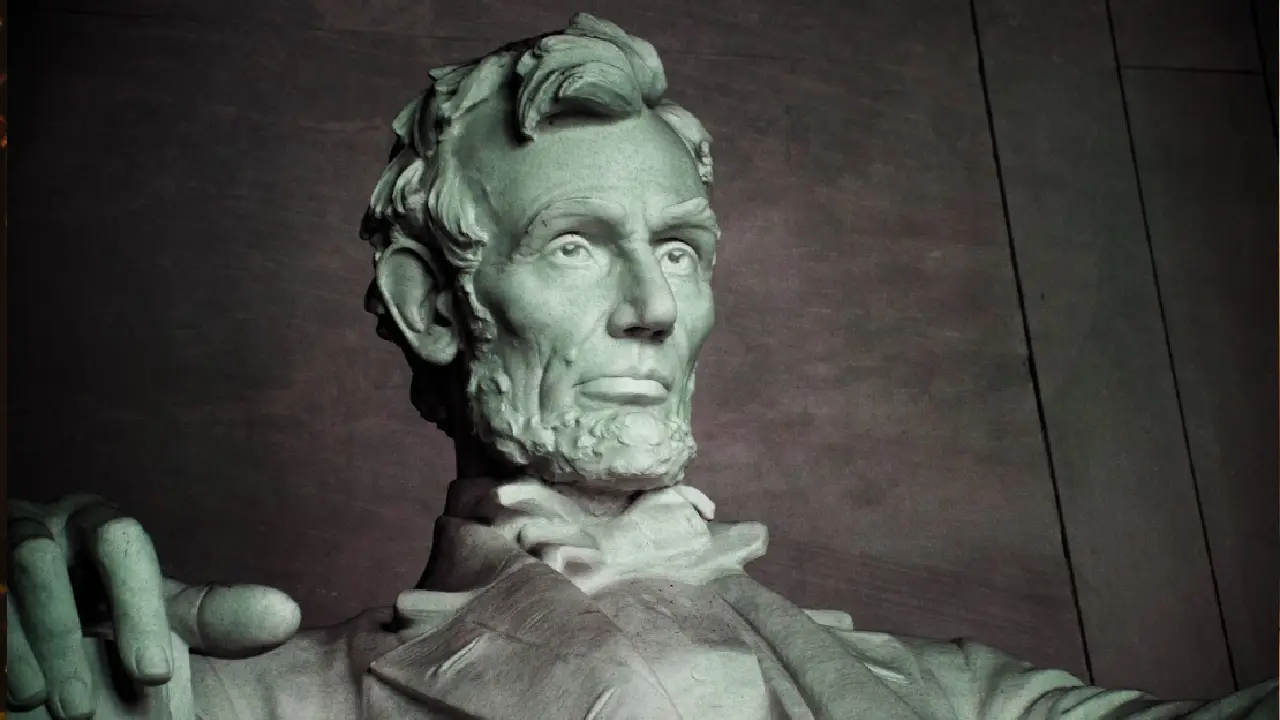
Abraham Lincoln served as the 16th president of the United States from 1861 until his assassination in 1865. His presidency coincided with the American Civil War, a conflict that threatened to divide the country permanently. Lincoln worked to preserve the Union and issued the Emancipation Proclamation in 1863, declaring enslaved people in areas still in rebellion to be free. His leadership helped place the abolition of slavery at the center of the war’s political purpose.
Lincoln’s legacy remains closely connected to the struggle for equality and the preservation of constitutional government. The Thirteenth Amendment, ratified after his death in 1865, abolished slavery throughout the United States. His speeches, including the Gettysburg Address, continue to influence discussions about democracy, national unity, and human rights. His presidency also illustrates the enormous challenges of protecting civil liberties during wartime.
2. Mahatma Gandhi — India
Mahatma Gandhi became a central figure in India’s struggle for independence from British colonial rule. He promoted nonviolent resistance, civil disobedience, and mass political participation. Campaigns such as the Salt March of 1930 challenged British authority and helped mobilize people from different communities. Gandhi’s methods offered an alternative to armed rebellion and brought international attention to the Indian independence movement.
Gandhi’s influence extended beyond India, inspiring civil rights and anti-colonial movements around the world. His emphasis on peaceful protest became an important reference point for later activists. However, historians also examine the limitations and controversies surrounding his views and political strategies. His legacy remains significant because it connects political change with public mobilization, moral argument, and nonviolent resistance.
3. Nelson Mandela — South Africa
Nelson Mandela became an internationally recognized figure in the struggle against apartheid, South Africa’s system of racial segregation and white-minority rule. He spent 27 years in prison before his release in 1990. Mandela subsequently helped negotiate the transition away from apartheid and became South Africa’s first Black president in 1994, following the country’s first democratic elections based on universal adult suffrage.
As president, Mandela emphasized national reconciliation and the creation of democratic institutions. His leadership helped guide South Africa through a major political transition, although economic inequality and the consequences of apartheid remained unresolved. Mandela’s historical significance lies in his role in the anti-apartheid struggle and his efforts to establish a more inclusive political system. His life continues to inform international discussions about justice, reconciliation, and democratic change.
4. Winston Churchill — United Kingdom
Winston Churchill served as British prime minister during much of the Second World War, from 1940 to 1945, and again from 1951 to 1955. During the early years of the war, Britain faced the threat of Nazi Germany while much of continental Europe came under German control. Churchill’s speeches and public communications helped sustain British resistance and became an important part of the country’s wartime political identity.
Churchill’s legacy is complex. His wartime leadership remains a major subject of historical study, but his imperial outlook and policies have attracted substantial criticism. His record must be considered within the broader context of British colonialism, wartime decisions, and the experiences of people affected by those policies. His career illustrates how a politician’s historical reputation can include both consequential leadership and deeply contested decisions.
5. Franklin D. Roosevelt — United States
Franklin D. Roosevelt served as the 32nd president of the United States from 1933 to 1945. He took office during the Great Depression, when unemployment, bank failures, and economic hardship affected millions of Americans. His New Deal programs expanded the federal government’s role in economic recovery, public employment, financial regulation, and social protection. These policies helped reshape the relationship between the American government and its citizens.
Roosevelt also led the United States through most of the Second World War, working with Allied leaders as the conflict transformed the international order. His administration helped lay the foundations for the postwar institutions that emerged in 1945. However, his presidency also included the forced incarceration of Japanese Americans during the war, a policy widely recognized as a serious violation of civil liberties. His legacy demonstrates the lasting effects of government policy in both domestic and international affairs.
6. Mustafa Kemal Atatürk — Türkiye
Mustafa Kemal Atatürk led the Turkish national movement after the First World War and founded the Republic of Türkiye in 1923. Following the collapse of the Ottoman Empire, he introduced major reforms to political institutions, education, law, and public life. His government abolished the sultanate, adopted a republican system, and pursued a program of modernization intended to establish a new national identity.
Atatürk’s reforms transformed Türkiye and influenced its development throughout the twentieth century. Changes to the legal system, education, language, and the relationship between religion and the state reshaped public institutions. Yet his government also restricted political opposition, and the reforms took place within an authoritarian political framework. His historical legacy therefore involves both the construction of a modern republic and debates about political pluralism, state authority, and the pace of social change.
7. Deng Xiaoping — China
Deng Xiaoping emerged as China’s paramount leader in the late 1970s and became closely associated with the country’s economic reform program. His government moved away from aspects of strict central planning and introduced market-oriented policies, expanded opportunities for foreign investment, and established special economic zones. These changes helped transform China’s productive economy and contributed to its growing role in global trade.
China’s economic transformation under Deng influenced international manufacturing, investment, and economic relations for decades. However, economic liberalization did not lead to comparable political liberalization. The Chinese government continued to maintain one-party rule, and the violent suppression of protests around Tiananmen Square in 1989 remains a defining controversy of Deng’s era. His legacy highlights the distinction between economic reform and political freedom.
8. Napoleon Bonaparte — France
Napoleon Bonaparte rose to power during the political upheaval that followed the French Revolution. He became emperor in 1804 and reorganized France’s government, administration, and legal institutions. The Napoleonic Code established a more standardized legal framework and influenced civil-law systems in several countries. His military campaigns also reshaped European borders and challenged established monarchies across the continent.
Napoleon’s influence extended far beyond his rule in France. His conquests spread some revolutionary-era reforms, but they also brought war, occupation, and enormous human losses across Europe. His ambition ultimately contributed to his defeat and exile. Historians continue to debate his place in modern history because his career combined administrative innovation with authoritarian rule and prolonged military conflict.
9. Jawaharlal Nehru — India
Jawaharlal Nehru became the first prime minister of independent India in 1947. He led the country during its early years after British colonial rule ended and helped establish parliamentary institutions, national development programs, and a modern public-sector framework. His government invested in scientific research, higher education, industrial development, and large infrastructure projects as India worked to build its economy.
Nehru also played an important role in the Non-Aligned Movement during the Cold War. This approach sought to preserve strategic independence from the United States-led and Soviet-led blocs. His policies helped shape India’s international identity, although his government faced serious economic, social, and security challenges. His historical importance rests largely on the institutions and foreign-policy traditions that developed during the early decades of Indian independence.
10. Muhammad Ali Jinnah — Pakistan
Muhammad Ali Jinnah was the principal political leader of the movement that resulted in the creation of Pakistan in 1947. A trained lawyer and prominent politician, he initially worked within Indian constitutional politics before becoming the leading advocate for a separate homeland for Muslims in British India. His negotiations with British authorities and other political leaders helped shape the political developments that led to Partition.
Jinnah became Pakistan’s first governor-general and faced the enormous task of establishing a new state amid mass migration, communal violence, and administrative challenges. He emphasized constitutional government, public service, and the responsibilities of the new state toward its citizens. His early death in 1948 meant that he had little time to shape Pakistan’s long-term institutions. Nevertheless, his role in Pakistan’s founding remains central to the country’s political history and national identity.